
Polybutylene pipe is a gray, sometimes blue, plastic water supply pipe that was installed in millions of US homes, including many in Florida, from roughly the late 1970s to the mid 1990s. It's prone to sudden failures, especially at the fittings, and many Florida insurers charge more for homes that have it or decline to cover them. Replacing it with PEX or copper through a whole-house repipe is the permanent fix.
How to tell if you have polybutylene
You can often check in a few minutes:
- At the water heater. Look at the pipes coming out of the top. Polybutylene is flexible, usually gray, and often connected with plastic or crimped metal fittings.
- Under sinks and at toilets. The short pipe coming out of the wall to the shut-off valve may be polybutylene, though some homes have copper stubs here even when the walls hide polybutylene.
- At the main shut-off. Where the main line enters the house, or at the meter outside.
- Markings. Polybutylene pipe is often stamped with the code PB2110.
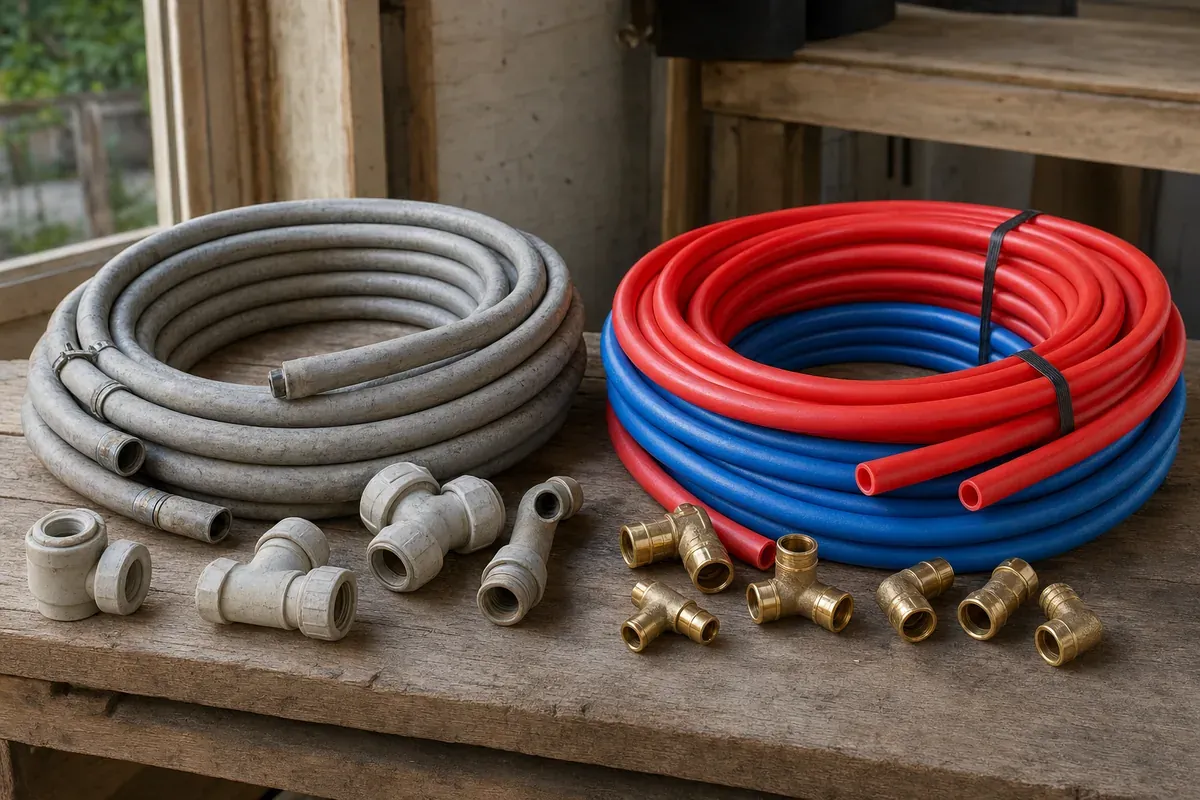
Don't confuse it with gray PVC drain pipe, which is rigid and used for drains, or with modern PEX, which is usually red, blue or white and marked PEX. If you're not sure, a plumber can confirm in a few minutes.
Why polybutylene fails
Polybutylene was cheap and easy to install, which is why it spread so quickly during Florida's 1980s building boom. Over time, the problems became clear. The pipe can become brittle and crack from the inside, a process widely attributed to reaction with the oxidants used to disinfect public water. The early plastic fittings, and some crimp fittings, were also prone to failure. Failures are often sudden, without the slow drip that gives you warning, and can flood a room or a wall cavity before anyone notices.
In Jacksonville that matters in a lot of neighborhoods. Subdivisions in Mandarin, Southside, Baymeadows, Arlington, Orange Park and the newer parts of the Westside and Northside were built heavily during the polybutylene years.
Polybutylene and homeowners insurance in Florida
Florida's insurance market has become strict about older plumbing. Many insurers ask about pipe type during underwriting or require a four-point inspection, which covers roof, electrical, HVAC and plumbing, for older homes. Polybutylene is one of the items those inspections flag. Depending on the company, a home with polybutylene may face higher premiums, exclusions for water damage or a refusal to write the policy at all.
Insurance generally won't pay to replace pipe that hasn't failed. But replacing polybutylene can make it much easier to get and keep coverage, and keep the price reasonable. Check with your insurer or agent about how they treat it.
Buying a home? Ask about the pipe type before you close. A four-point inspection or a plumber's quick check can tell you, and a repipe estimate gives you something concrete to negotiate with.
What replacement involves
Replacing polybutylene means a whole-house repipe. In most Jacksonville homes:
- A plumber assesses the home and gives you a price, usually for PEX, sometimes copper.
- A permit is pulled.
- New lines are run through the attic and down interior walls to each fixture, with small, neat openings.
- Fixtures are switched to the new lines, the system is pressure tested and inspected, and the old pipe is abandoned in place.
- Wall openings are patched.
Most single-family homes are done in two to five days, and you can usually stay in the house, with water off only part of the day. Because new lines typically run overhead rather than under the slab, a repipe also eliminates future slab leaks on the supply side.
What if I can't replace it right away?
- Know where your main shut-off valve is, and make sure it turns
- Keep water pressure moderate. A pressure reducing valve helps if it's high
- Check visible pipe and fittings, especially at the water heater, for discoloration, flaking or drips
- Turn off the main water when you travel
- Consider a water leak sensor or automatic shut-off valve
When to call a plumber
Call if you find polybutylene and want a repipe price, if your insurer is asking about your pipes, or right away if you see a leak, a wet spot or a sudden drop in pressure. In the Jacksonville area, call (833) 819-1044 any time, or read more about whole-house repiping in Jacksonville.
Polybutylene FAQ
Is polybutylene pipe illegal in Florida?
It's no longer installed and isn't allowed for new work under current codes, but existing polybutylene isn't illegal to have. The concerns are failure risk and insurance.
How long does polybutylene pipe last?
There's no reliable lifespan. Some systems have lasted decades, while others fail early. The age of most polybutylene now, 30 years or more, increases the risk.
Will insurance cover a leak from polybutylene pipe?
It depends on your policy. Some cover sudden water damage, some exclude it for polybutylene, and some won't insure the home at all. Check your policy.
How much does it cost to replace polybutylene?
It depends on the home's size, the number of fixtures, the pipe you choose and access. A plumber can give you a firm price after seeing the house.
Is blue pipe polybutylene?
Sometimes. Polybutylene was made in gray, blue and black. Modern blue PEX is common too, so check the markings or ask a plumber.