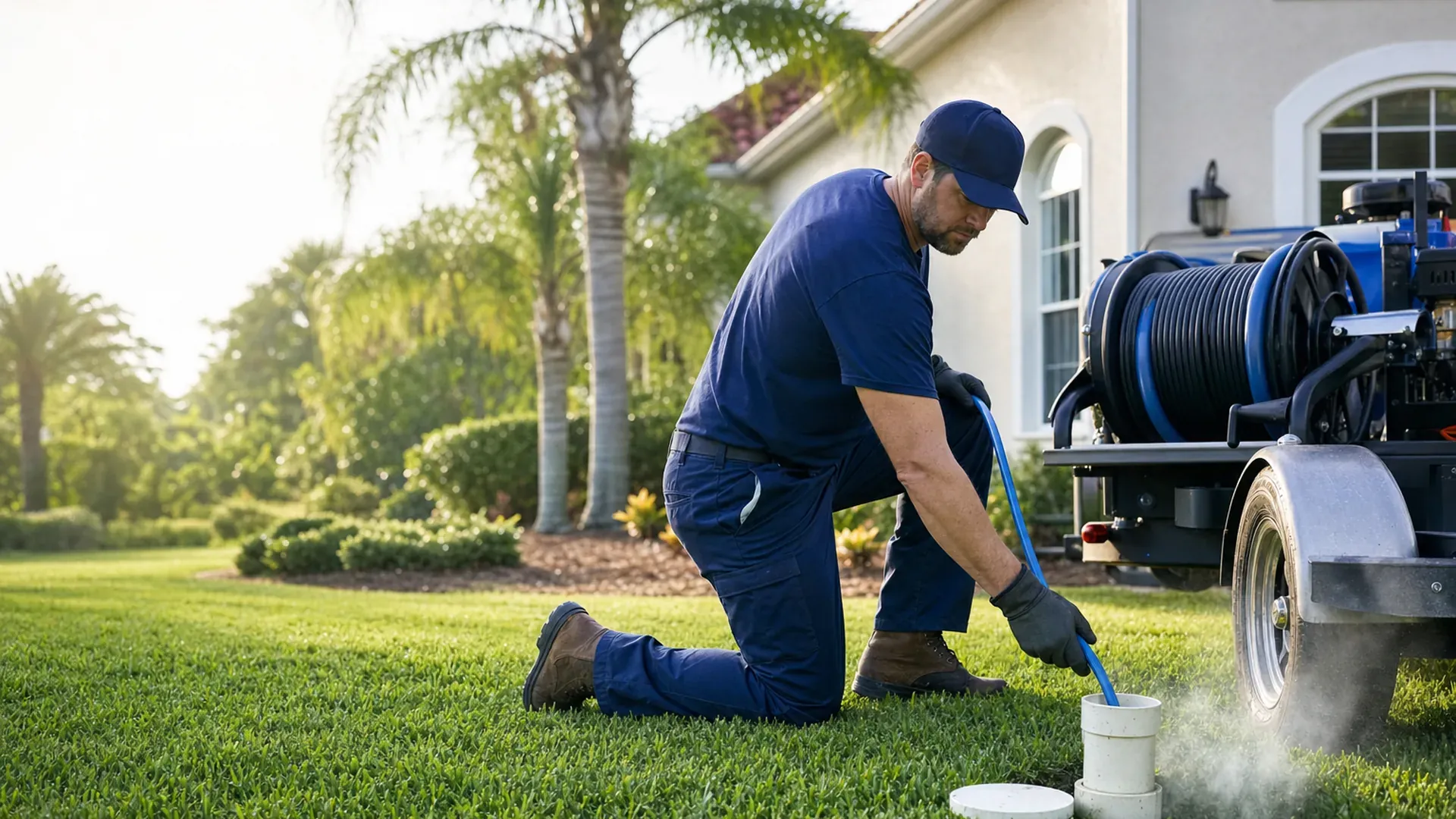
Hydro jetting in Jacksonville uses water at very high pressure, fed through a flexible hose with a specialized nozzle, to scour the inside of drain and sewer lines. Rear-facing jets pull the hose forward while blasting away grease, soap scum, mineral scale, sludge and roots, then flush the debris out. It restores the pipe close to its full diameter, so clogs come back far more slowly than after snaking.
When jetting beats snaking
A drain snake, or cable machine, is the right first tool for most single clogs. It cuts through the blockage and gets water moving. But it leaves the buildup on the pipe walls behind, and that's where the next clog starts. Hydro jetting is the better choice when:
- The same drain or main line clogs again within weeks or months
- A kitchen line is coated with years of grease, common in homes with a disposal
- Roots keep returning at the same joint
- Old cast iron has heavy scale narrowing the pipe
- A camera inspection shows sludge or debris along the whole run
- A restaurant, rental or multi-unit building needs routine line maintenance
Snaking
Quick and inexpensive. Opens the clog but leaves buildup on the walls. Best for a single, localized blockage like hair or a wipe.
Hydro jetting
Takes more equipment and time. Cleans the full circumference of the pipe and flushes debris out. Best for grease, scale, sludge and repeat clogs.

Roots & grease
In Jacksonville, two things fill most sewer lines: grease and roots.
Grease
Cooking fats cool and harden on the pipe walls, trapping food and soap until the line closes up. Jetting melts and flushes it out in a way a cable can't.
Roots
Live oak and laurel oak roots find joints in older clay and cast iron laterals. Jetting with a cutting nozzle clears them, but they grow back through the same cracks unless the pipe is repaired or lined.
If roots are the problem, jetting buys time. The lasting fix is repairing the joint or lining the pipe. See sewer line repair.
Is hydro jetting safe for my pipes?
For sound PVC, ABS and cast iron in reasonable condition, yes. Pressure is adjusted to the pipe size and material. It's not appropriate for every line, though. Badly corroded cast iron, broken clay, offset joints and Orangeburg pipe can be damaged, which is why a careful plumber runs a camera inspection first, especially in older homes in Riverside, Springfield, San Marco, Murray Hill and Arlington.
What to expect
- The plumber finds an access point, ideally a ground-level cleanout.
- A camera check confirms the pipe can take the pressure, where needed.
- The hose is fed through the line and jetted in passes, working the full length.
- A final camera pass or flow test confirms the line is clear.
What affects the cost
- Line length and size. A long main line takes more time than a short kitchen branch.
- Access. A cleanout is quickest; roof vents or pulling a toilet add time.
- How bad the buildup is. Heavy grease or roots need more passes.
- Camera inspection. Often done before and after.
For a single clog, standard drain cleaning may be all you need.
Hydro jetting across Jacksonville
Hydro jetting FAQ
What is hydro jetting?
A method of cleaning drain and sewer lines with water at very high pressure, delivered through a hose and nozzle that scours the inside of the pipe and flushes the debris away.
Is hydro jetting better than snaking?
For repeat clogs, grease and scale, yes, because it cleans the whole pipe wall. For a single localized clog, snaking is usually enough.
Can hydro jetting damage pipes?
It can damage pipes that are already broken, badly corroded or made of weak materials like Orangeburg. A camera inspection first avoids that.
Does hydro jetting remove tree roots?
It cuts and flushes roots, but they can regrow through the same cracks. Repairing or lining the pipe is the permanent fix.
How often should a line be hydro jetted?
Most homes only need it when a problem appears. Restaurants and lines with recurring grease or roots may benefit from yearly maintenance.