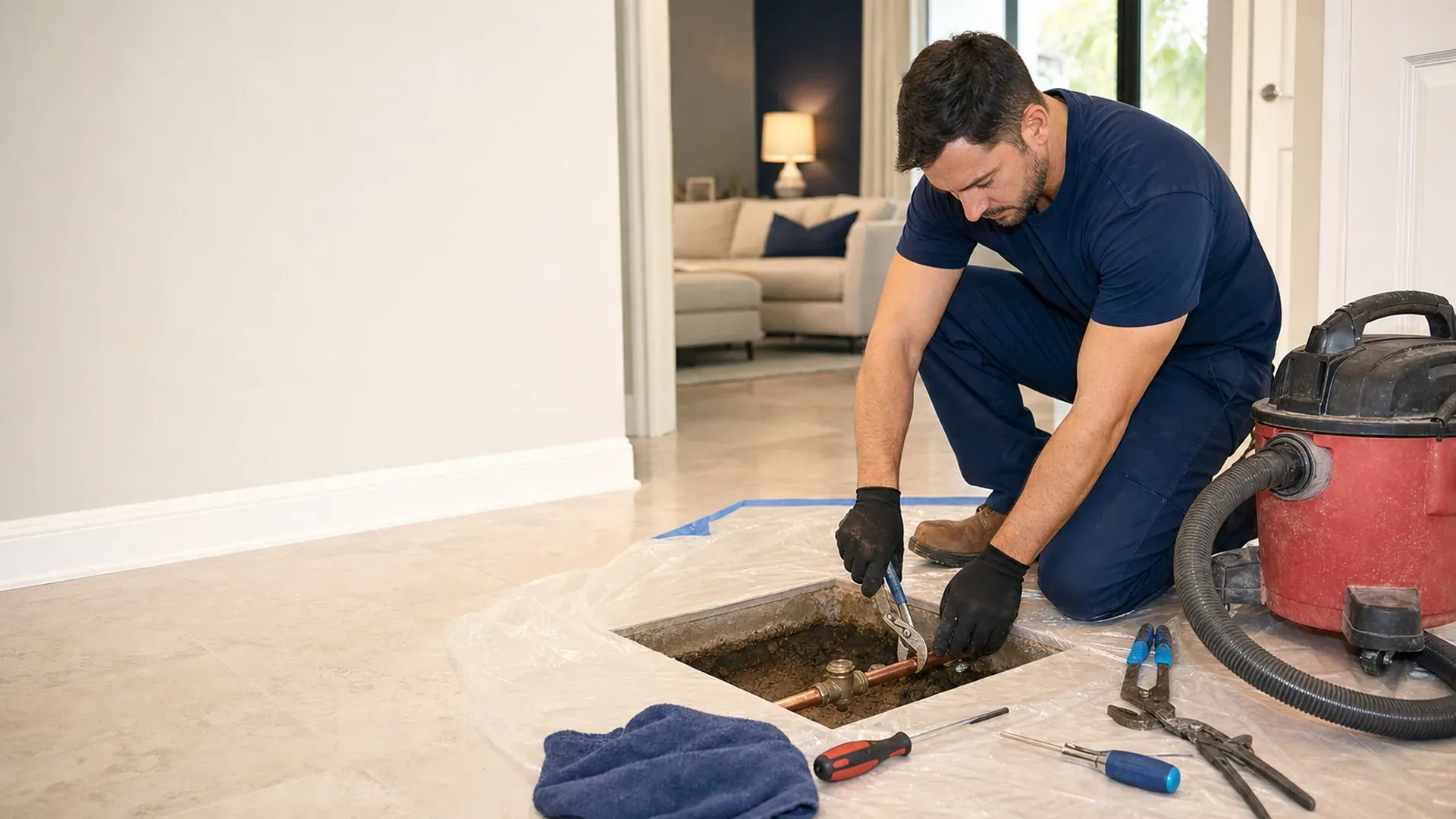
Slab leak repair in Jacksonville fixes a water line leaking under or inside your home's concrete foundation. After the leak is located with acoustic and thermal tools, a plumber either opens the slab at that one spot to repair it, reroutes the line around the slab through walls or the attic, or repipes the home if the pipe is failing in several places. Most Jacksonville homes sit on slabs, so this is one of the most common hidden leaks in the area.
Slab leak signs
- A warm or hot spot on a tile or concrete floor
- The sound of running water when everything is off
- A water bill that's climbed for no reason
- The meter's leak indicator moving with all fixtures off
- Damp or warped flooring, lifting tile or new cracks in tile
- Musty smells, or mildew along baseboards
- Low water pressure or a water heater that runs constantly
A hot water line leak is often noticed first because of the warm floor and the water heater running more than usual. A cold line leak can go on for months with nothing but a higher bill to show for it.
Not sure it's a slab leak? Read our guide to the 7 signs of a slab leak in a Florida home.
Why slab leaks happen in Jacksonville homes
Many Jacksonville homes from the 1960s through the 1990s have copper water lines run under the slab. Over decades, copper can develop pinholes from water chemistry, from abrasion where the pipe rubs against concrete or gravel as it expands and contracts, and from poor installation at bends and joints. Homes with polybutylene supply pipe, installed widely in Florida from the late 1970s to the mid 1990s, have their own failure risks. Sandy soil that shifts and settles adds stress on top.
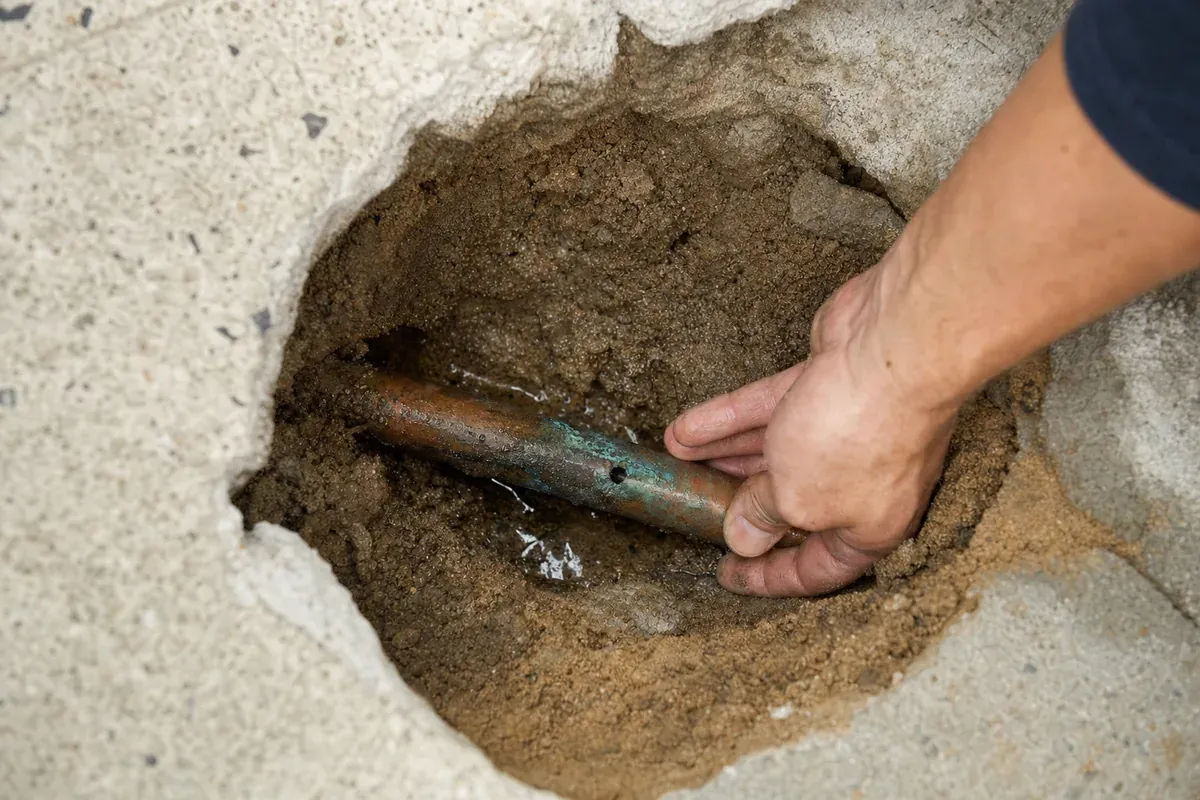
Foundation plumbing repair options
Once the leak is located, there are three main ways to fix it. The plumber should explain which one fits your home and why.
Spot repair
Open the slab at the marked location, repair the pipe and patch the concrete. Best when the pipe is otherwise in good shape and the leak is easy to reach.
Reroute
Run a new line through walls, the attic or around the outside of the home and abandon the leaking section under the slab. No jackhammering, and the new line is accessible.
Repipe
Replace the home's supply plumbing when it's failing in several places, often with PEX. Makes sense for repeat leaks or polybutylene.
Rerouting has become the most common choice for many slab leaks because it avoids breaking the floor and leaves the new pipe where it can be reached later. Spot repair still makes sense for a single leak in good pipe, especially in an open area like a garage. If this is your second or third leak, a repipe is usually cheaper in the long run than chasing one leak after another.
Insurance notes
Coverage for slab leaks varies widely between Florida policies. Many homeowners policies cover the cost of accessing the leak, called tear out, and the resulting water damage if the leak was sudden, but don't cover the pipe repair itself. Some exclude slab leaks or long-term seepage entirely, and some offer endorsements that add coverage. To protect a claim:
- Read the water damage and tear out sections of your policy, or call your insurer early
- Take photos and video of damage before anything is repaired
- Keep the leak detection findings and the repair invoice
- Ask the plumber to note the cause and location of the leak in writing
What affects the cost
- Detection. Pinpointing the leak is a separate step from repairing it.
- Repair method. Spot repair, reroute or repipe, and the length of the new line.
- Floor covering. Opening and patching tile, wood or concrete takes more work than carpet.
- Restoration. Drywall patching after a reroute and flooring replacement are often separate.
Slab leak repair across Jacksonville
Slab leak repair FAQ
How do plumbers find a slab leak?
They confirm a leak at the meter, isolate which line is leaking, then use acoustic listening equipment and thermal imaging to pinpoint the spot under the floor before opening anything. See our main leak detection page for more.
Is it better to reroute or repair a slab leak?
A spot repair can be fine for a single leak in good pipe. Rerouting avoids breaking the slab and replaces the problem section entirely, which is why many homeowners choose it. Repeat leaks point to repiping.
Does homeowners insurance cover slab leaks in Florida?
It depends on the policy. Many cover tear out and resulting damage from a sudden leak but not the pipe repair. Check your policy and contact your insurer early.
Can a slab leak damage my foundation?
Water running under the slab for a long time can wash out soil and contribute to settling, and it will damage flooring and promote mold. Fixing it promptly is the safe choice.
How long does slab leak repair take?
Many spot repairs and reroutes are finished in a day. A whole-house repipe usually takes a few days.