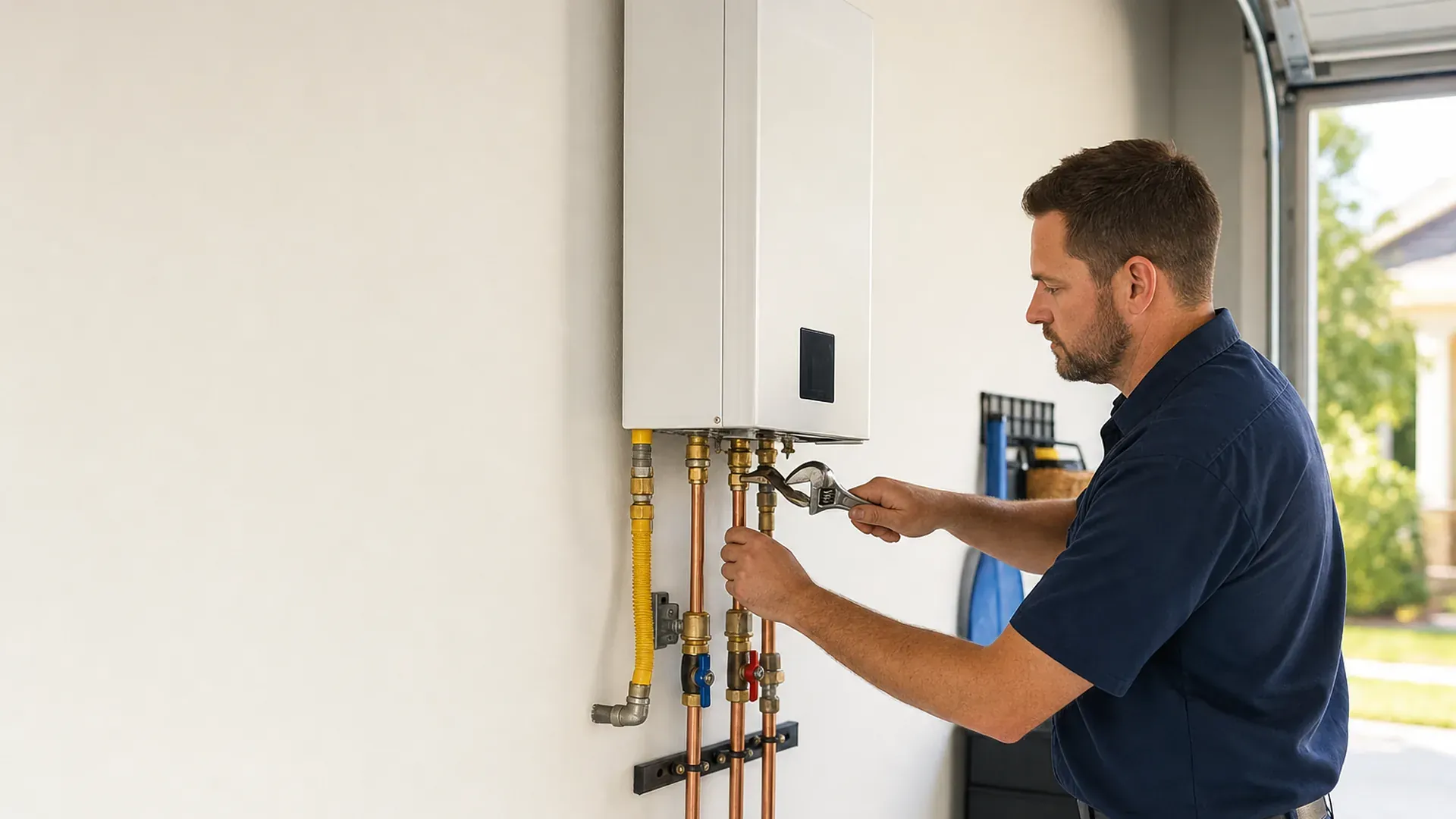
Tankless water heaters in Jacksonville heat water only when you open a tap, so there's no tank to keep hot and no running out halfway through a shower. Installation means sizing the unit for your household's peak demand, upgrading the gas line and venting for gas models or the electrical service for electric ones, and setting it up for Jacksonville's hard water so it lasts.
Tankless vs tank
Tankless
- Hot water on demand, without running out
- Wall mounted, frees up floor space
- No standby heat loss
- Lasts around 20 years with maintenance
- Higher upfront cost
- Needs yearly descaling with hard water
Tank
- Lower upfront cost
- Simple, familiar, easy to replace
- Stored hot water available instantly
- Can run out with several showers in a row
- Typically lasts 8 to 12 years
- Loses some heat while it sits
Tankless makes the most sense for homes with natural gas, larger households that run out of hot water, and anyone who wants the garage floor space back. In smaller homes with modest use, a standard or heat pump tank can still be the better value. See water heater repair and replacement for tank options.
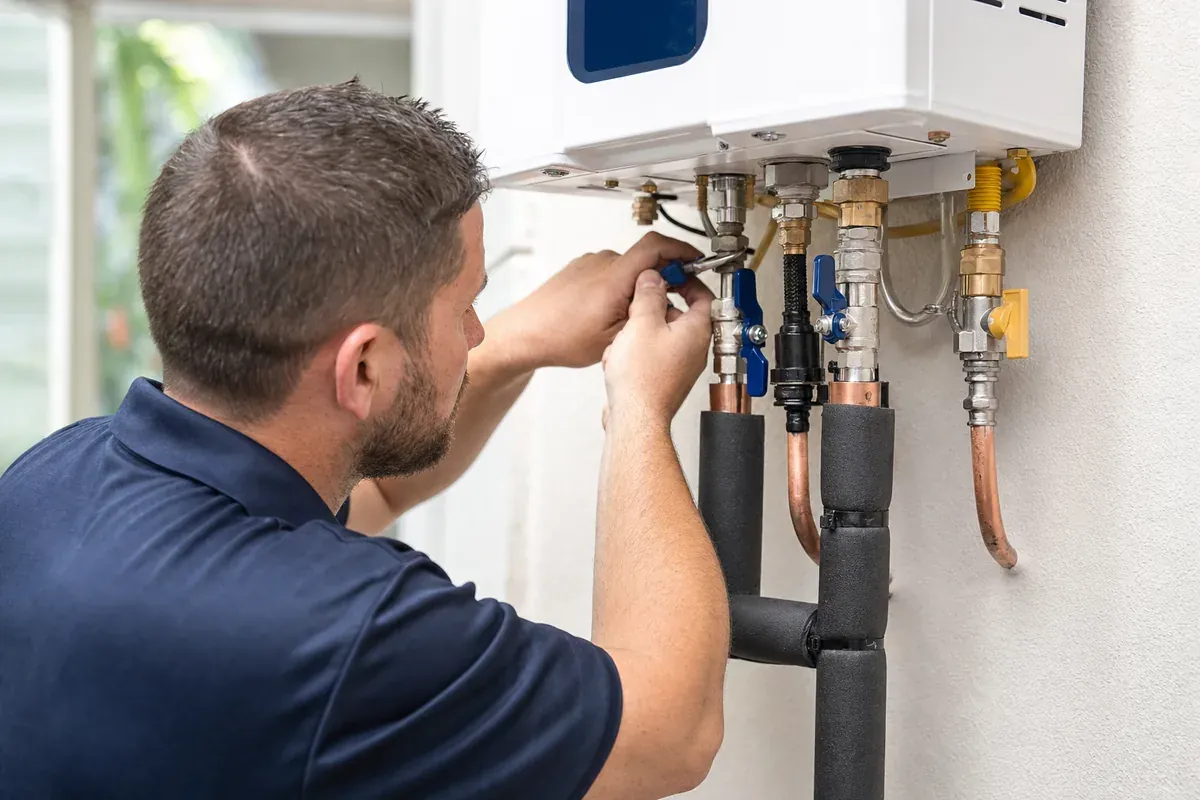
Sizing a tankless water heater
Tankless units are sized by flow rate, in gallons per minute, at the temperature rise you need. Jacksonville's groundwater arrives fairly warm compared with northern states, which helps, but a unit still has to handle your busiest moment, such as two showers and the dishwasher at once. An undersized unit gives lukewarm water when demand peaks, so the plumber should ask how you actually use hot water.
Gas line needs for tankless
Gas tankless heaters draw far more gas at full fire than a tank heater does, often several times as much. That means:
- The gas line may need upsizing. A line that fed a 40,000 BTU tank often can't supply a high-output tankless unit. See gas line services.
- The meter or regulator may need upgrading. Your gas utility, TECO Peoples Gas in Jacksonville, or your propane supplier may need to confirm capacity.
- Venting changes. Most tankless units use dedicated, sealed venting, often PVC for condensing models, run to an outside wall.
- A condensate drain. High-efficiency condensing units produce acidic condensate that needs a drain, often with a neutralizer.
Electric tankless units avoid gas work but need very large electrical circuits, sometimes more than an older home's panel can supply. Have the panel checked before choosing electric.
Hard water and maintenance
Jacksonville's water comes from the Floridan aquifer and is hard. Scale builds up on the heat exchanger of a tankless unit and reduces performance and lifespan. Isolation valves installed with the unit let it be flushed with a descaling solution once a year, and a scale-reduction filter or whole-house filtration helps further. See our guide to Jacksonville water quality.
What affects the cost
- Unit size and type. Condensing vs non-condensing, gas vs electric, indoor vs outdoor.
- Gas or electrical upgrades. Line upsizing, meter capacity or a new circuit.
- Venting and location. Converting a tank location in a closet or attic can take more work than a garage wall.
- Permits. Water heater and gas work require permits and inspection.
Tankless installation across Jacksonville
Tankless water heater FAQ
Are tankless water heaters worth it in Florida?
They can be, especially in homes with natural gas and higher hot water use. Long life and no standby losses offset a higher upfront cost over time.
Do I need a bigger gas line for a tankless water heater?
Often, yes. Tankless units draw much more gas at full output than tank heaters, so the line and sometimes the meter may need upgrading.
How long do tankless water heaters last?
Around 20 years is common with yearly descaling. Hard water without maintenance shortens that.
Can a tankless water heater run out of hot water?
It won't run out, but an undersized unit can't keep the temperature up when several fixtures run at once. Proper sizing prevents that.
Is an electric tankless water heater a good option?
It can be for smaller loads, but whole-house electric units need very large electrical circuits, so the panel must be checked first.