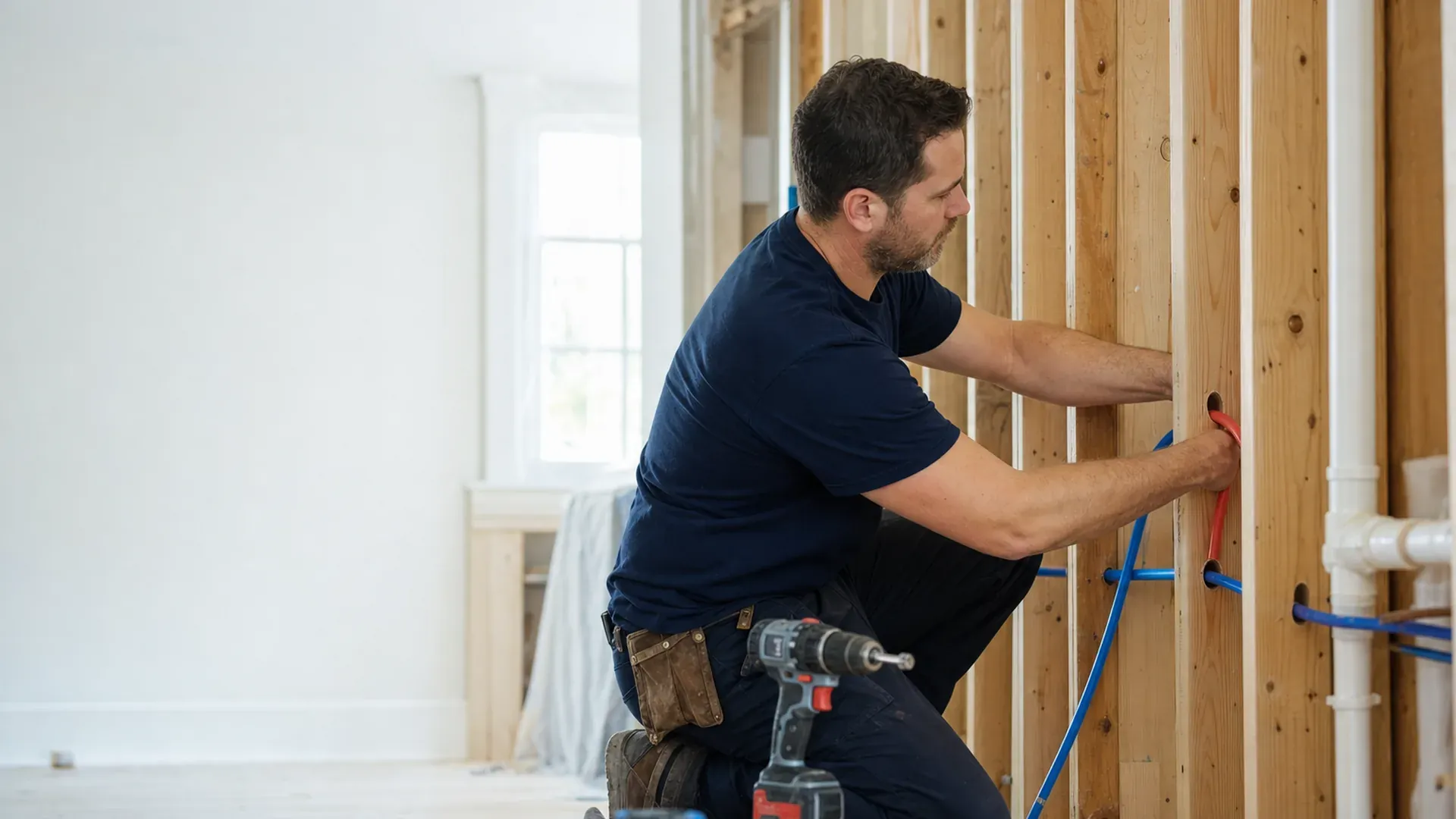
Repiping in Jacksonville means replacing your home's water supply lines, usually polybutylene, galvanized steel or failing copper, with new PEX or copper pipe. It's the long-term fix for homes with repeated leaks, low pressure or pipe that insurers won't cover. Most single-family repipes take a few days, and in slab homes new lines typically run through the attic and walls instead of under the floor.
Polybutylene & galvanized pipe replacement
Two kinds of pipe drive most repipes in Jacksonville:
Polybutylene
Gray, sometimes blue, plastic supply pipe installed widely in Florida from the late 1970s to the mid 1990s. It's known for sudden failures at fittings and from reaction with chlorinated water, and many insurers charge more for it or decline to cover it. Read more in polybutylene pipes in Florida.
Galvanized steel
Common in homes built before the 1960s, in Riverside, Springfield, Murray Hill and older parts of Arlington. It rusts from the inside, narrowing the pipe until pressure drops, and leaks at threaded joints.
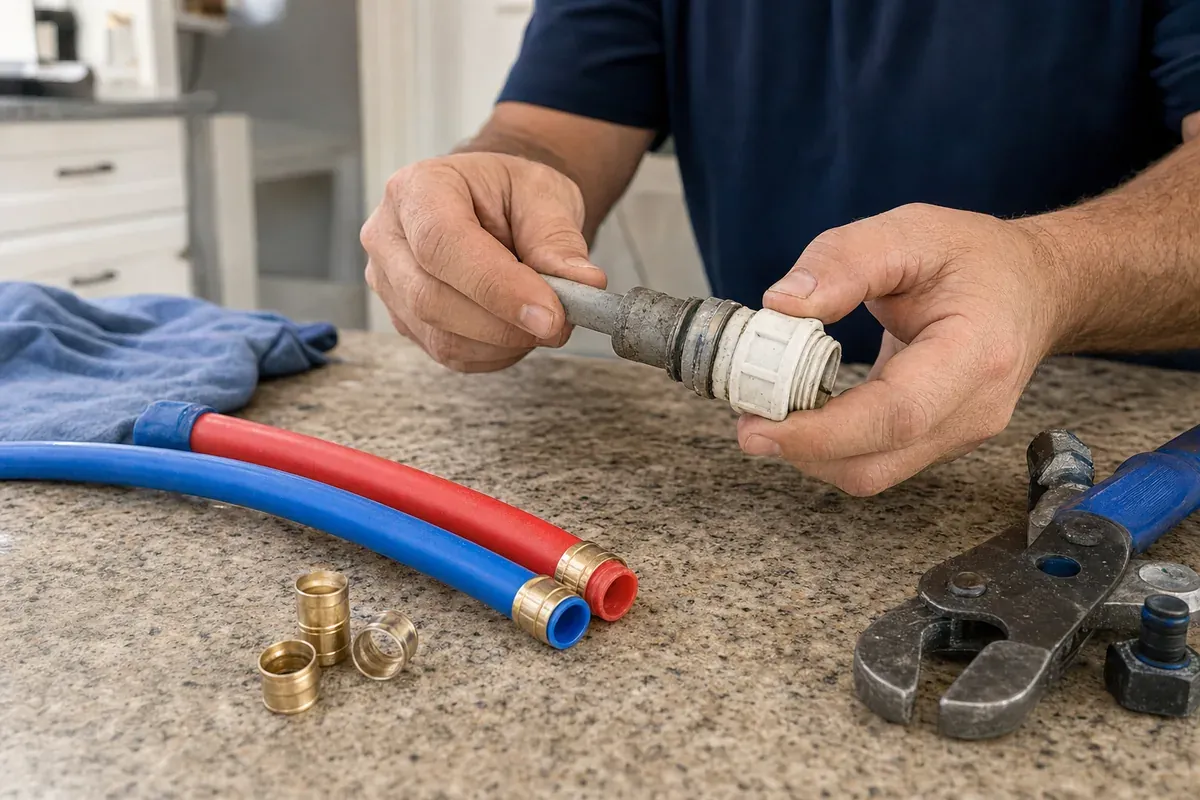
Copper itself can also be a reason to repipe. Many 1970s to 1990s Jacksonville slab homes have copper lines under the floor that are now developing pinhole leaks. If you've had a second or third slab leak, rerouting the whole house overhead is often cheaper than chasing leaks one at a time.
PEX vs copper
PEX
Flexible plastic tubing that runs in long continuous lengths with fewer fittings. It's quicker to install, which means fewer and smaller wall openings and a lower cost. It resists scale and won't pinhole from water chemistry. The most common choice for Florida repipes today.
Copper
Long track record, rigid and durable, and preferred by some homeowners. It costs more in material and labor, needs more fittings and more wall access, and can develop pinholes over time depending on water chemistry.
Repipe timeline & cost
A typical single-family repipe in Jacksonville follows this pattern:
- Assessment. The plumber checks pipe material, layout, attic access, fixture count and the water heater location, and gives you a price.
- Permit. Repiping requires a permit and inspection.
- New lines. New supply lines are run, usually through the attic and down interior walls to each fixture, with small, tidy openings. Water is typically off only part of each day.
- Switchover and testing. Fixtures are connected to the new lines, the system is pressure tested and the old lines are abandoned.
- Inspection and patching. After the inspection, wall openings are closed. Patching and paint may be included or handled separately, so ask.
Most homes are done in two to five days. Cost depends on:
- House size and fixture count. More bathrooms and fixtures mean more pipe and connections.
- Material. PEX costs less to install than copper.
- Access. Single-story homes with attic access are the simplest; two-story homes and tight attics take longer.
- Drywall repair. Whether patching and painting are included.
Signs you need a repipe
- Polybutylene or galvanized supply pipe anywhere in the house
- More than one leak in the past few years
- Low pressure throughout the house
- Rusty, discolored or metallic-tasting water
- An insurer asking about or excluding your pipe type
Repiping across Jacksonville
Repiping FAQ
How long does it take to repipe a house?
Most single-family repipes take two to five days, depending on size, layout and access.
Can I stay in my home during a repipe?
Usually, yes. Water is shut off for parts of the day while connections are made, and restored at night.
Is PEX better than copper?
Both are good. PEX is less expensive to install, needs fewer fittings and fewer wall openings, and doesn't pinhole. Copper has a longer track record and some homeowners prefer it.
Does homeowners insurance cover polybutylene replacement?
Insurance usually doesn't pay to replace pipe proactively, but replacing polybutylene can make it easier and cheaper to get coverage.
How do I know if I have polybutylene pipe?
Look for gray, sometimes blue, flexible plastic pipe near the water heater, under sinks or at the main shut-off, often stamped PB2110. A plumber can confirm.