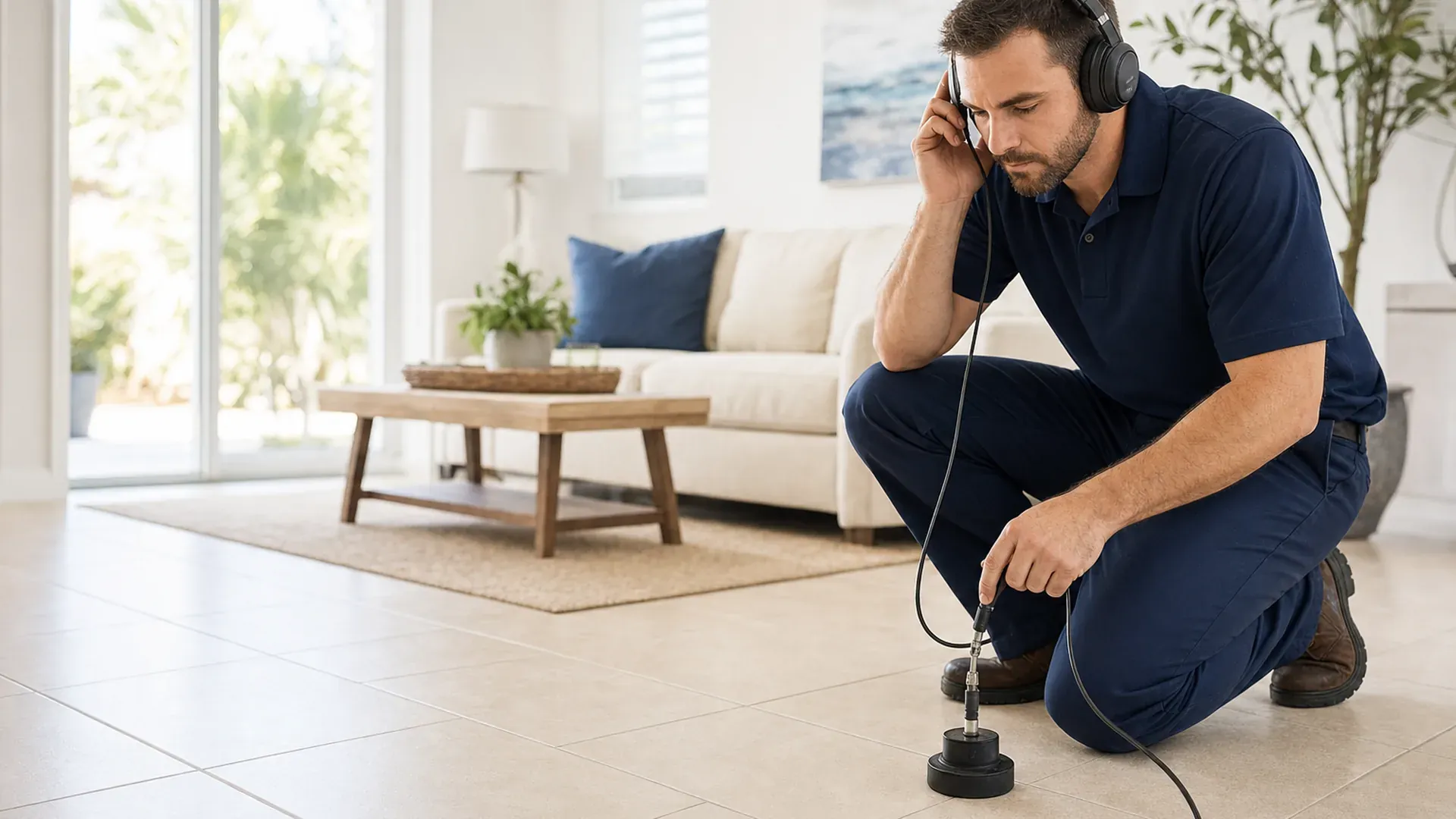
Leak detection in Jacksonville means finding a leak you can't see, inside a wall, under a concrete slab or along the buried water line, using non-invasive tools like acoustic listening equipment, thermal imaging, moisture meters and pressure tests. Pinpointing the leak first means the repair opening is small and in the right place, instead of exploratory holes all over the house.
How hidden leaks are found, without tearing things up
A good leak search starts simple and gets more precise.
- Confirm there's a leak. With every fixture off, the plumber watches the water meter's leak indicator. If it's moving, water is going somewhere.
- Isolate it. Shutting off sections, or pressure testing the hot and cold sides separately, narrows down which line is leaking.
- Listen. Acoustic equipment picks up the sound of water escaping from a pressurized pipe through concrete, tile and soil.
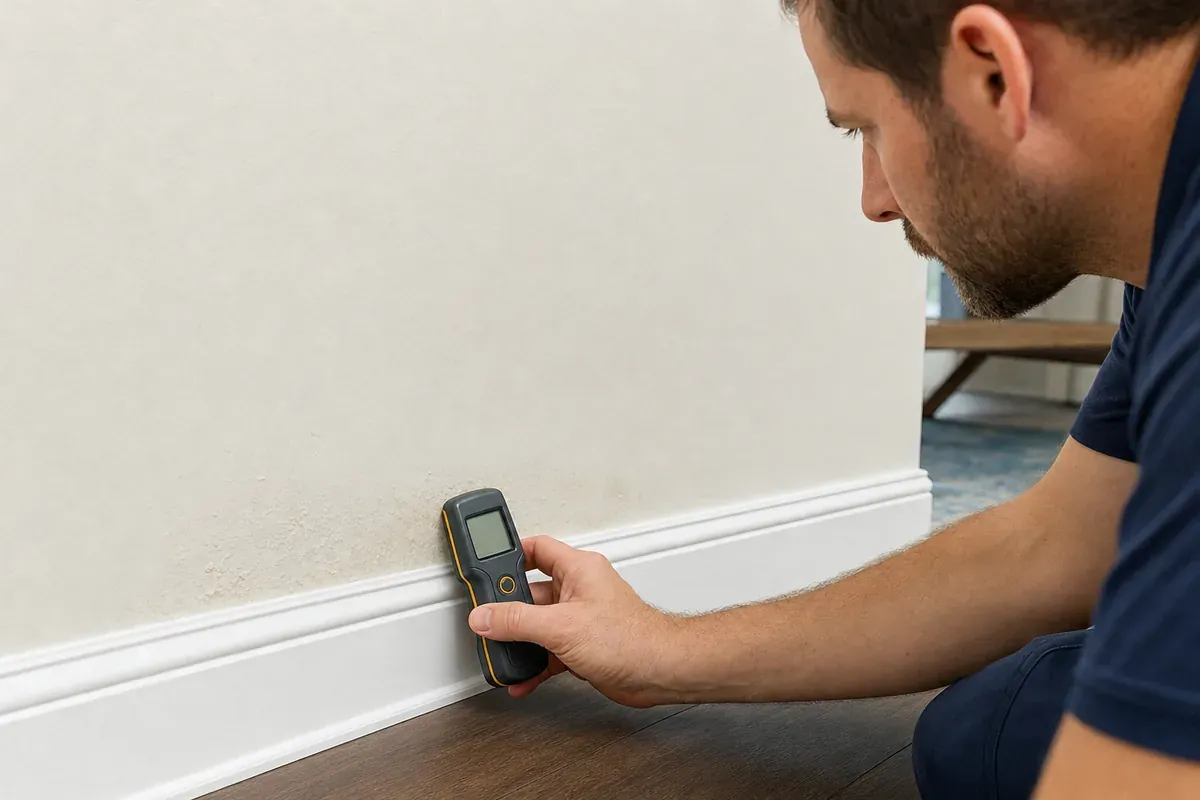
- See it. Thermal cameras show temperature differences, which makes hot water leaks under a slab especially easy to trace, and moisture meters confirm what's wet.
- Mark it. The leak location is marked so the repair can be made with the smallest possible opening.

Slab leaks
Most homes in Jacksonville are built on concrete slabs, with the water lines running under or through the slab. When one of those lines develops a pinhole, often from age, abrasion against the concrete or water chemistry, water escapes under the house. Warm spots on the floor, the sound of running water, cracks in tile or flooring and a jump in the water bill are the classic signs.
Slab leaks are repaired in one of three ways: open the slab at the leak and fix that spot, reroute the line through walls or the attic and abandon the leaking section, or repipe if the pipe is failing in many places. See slab leak repair for how to choose.
Water line leaks
The main water line runs from the meter at the street to your house. A leak there may show up as a soggy patch of lawn, a sinkhole-like depression, low water pressure or a meter that spins with everything off. Lines in older Jacksonville homes may be galvanized steel, which rusts from the inside, or polybutylene, which fails at the fittings. Repairs range from a single coupling to replacing the line. More on water line repair.
If leaks keep turning up in different places, the problem isn't one leak, it's the pipe. Homes with polybutylene or corroded galvanized pipe are good candidates for whole-house repiping.
Signs of a hidden leak
- A water bill that's higher than usual with no change in use
- The meter's leak indicator moving with every fixture turned off
- The sound of running water when nothing is on
- Warm spots on a tile or concrete floor
- Damp drywall, bubbling paint, stained baseboards or musty smells
- Cracks in tile or flooring, or a wet patch of lawn that never dries
- Low water pressure throughout the house
More detail on each warning sign is in our guide to slab leak signs, and if your home has gray plastic supply pipe, read about polybutylene pipes in Florida.
Why it matters in Jacksonville
Florida's heat and humidity turn a hidden leak into a mold problem fast. A slow leak behind a shower wall or under a vanity can rot subfloor and drywall within weeks, and insurers often treat long-term leaks differently from sudden ones. Finding it early is cheaper on every front.
What affects the cost
- Detection. How many lines need testing and how hard the leak is to isolate.
- Location. A leak in an open wall is simpler than one under a slab or a driveway.
- Repair method. Spot repair, reroute or repipe.
- Restoration. Patching drywall, tile or concrete after the repair is often a separate job.
Leak detection across Jacksonville
Leak detection FAQ
How do I check for a water leak myself?
Turn off every faucet and water-using appliance, then look at the water meter. If the small leak indicator is spinning or the reading changes over an hour, you have a leak somewhere.
Can a leak be found without breaking walls or floors?
Yes. Acoustic listening devices, thermal cameras, moisture meters and pressure tests let a plumber pinpoint most leaks before opening anything, so the repair opening is small.
Does homeowners insurance cover leak detection?
Some policies cover the cost of finding and accessing a leak that caused sudden damage, but not the pipe repair itself. Coverage varies widely, so check with your insurer.
What does a slab leak sound like?
Often a faint hiss or the sound of running water under the floor when nothing is turned on. You may also feel a warm spot if it's a hot water line.
Why is my water bill suddenly so high?
A running toilet is the most common cause. If the toilets are fine, a hidden leak in the water line, under the slab or in a wall is likely.