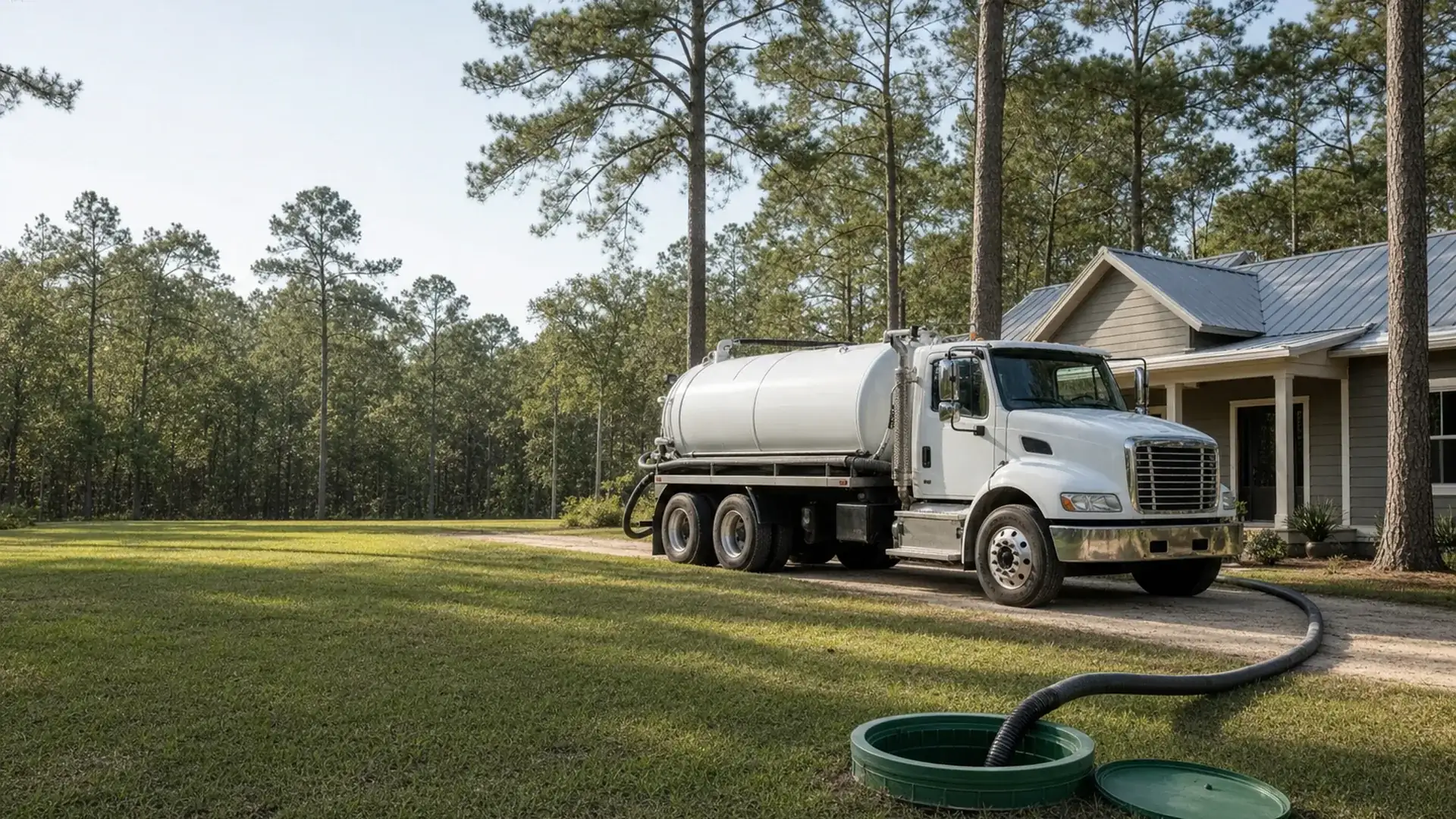
Septic tank pumping in Jacksonville removes the sludge and scum that collect in your tank so solids don't wash out into the drain field. For a typical Florida household, pumping every three to five years is a common guideline. Waiting too long is the most common reason drain fields fail early, and a drain field costs far more to replace than a lifetime of pump-outs.
What happens during a pump-out
- Locate and open the tank. If the lids are buried, they're dug up. Adding risers makes every future visit faster.
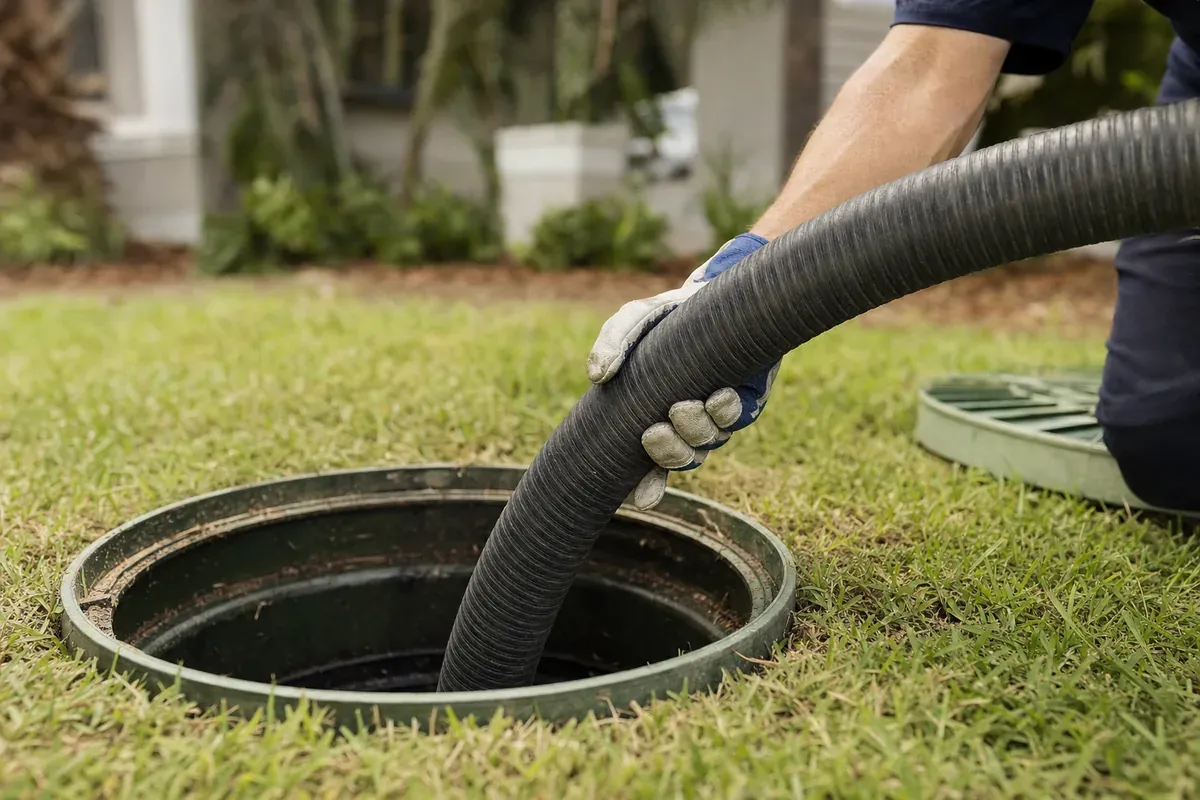
- Pump both compartments. Most tanks have two compartments, and both need emptying through their own access ports.
- Check the tank. With the tank empty, inlet and outlet baffles, the tank walls and the effluent filter can be inspected.
- Look for warning signs. Water flowing back into the tank from the drain field after pumping, for example, points to a saturated field.
How often to pump in Florida
How often depends on tank size, how many people live in the home, and habits like using a garbage disposal. As a rough guide:
| Household | Typical interval |
|---|---|
| 1 to 2 people, no disposal | Around every 5 years |
| 3 to 4 people | Around every 3 to 4 years |
| 5 or more people, or a garbage disposal | Around every 2 to 3 years |
These are general guidelines, not rules. The only way to know is to check the sludge and scum levels. Our article on how often to pump a septic tank in Florida goes deeper, and a plumber can measure your tank and recommend an interval.
Northeast Florida conditions make regular pumping more important, not less. Sandy soils and a water table close to the surface mean drain fields have little margin, and summer storms and hurricane season can saturate the ground for days.
24-hour septic service
Septic problems don't keep business hours. If sewage is backing up into the house, the alarm on a pumped system is sounding, or wastewater is surfacing in the yard, call any time. Stop using water first, including the washer and dishwasher, which send large volumes into the tank. A plumber can tell you whether you need an emergency pump-out, a repair to a pump or baffle, or both.
A full tank is only one cause of backups. A clog in the line between the house and the tank, a failed lift pump or a broken baffle can look exactly the same, which is why it helps to have someone who can diagnose the problem, not just empty the tank. See septic tank repair.
Keep your septic healthy between pump-outs
- Spread out laundry over the week instead of doing every load on one day
- Keep grease, wipes, paper towels, cat litter and medications out of drains
- Fix running toilets and dripping faucets, which add a lot of water
- Don't drive or park on the drain field, and keep trees away from it
- Keep a record of each pump-out with the date and tank levels
What affects the cost
- Tank size. Larger tanks hold more and take longer to pump.
- Access. Buried lids add digging; risers make it quick.
- Timing. Emergency and after-hours pumping may cost more.
- Extras. Effluent filter cleaning, riser installation or repairs found during the visit.
Septic pumping across Jacksonville
Septic pumping FAQ
How often should I pump my septic tank in Florida?
Every three to five years is a common guideline for a typical household. Larger families, small tanks and garbage disposals mean pumping more often.
How do I know my septic tank is full?
Slow drains throughout the house, gurgling, sewage smells near the tank and backups into the lowest drains are common signs. The surest way is to have the levels measured.
Is 24 hour septic service available in Jacksonville?
Yes. Calls are answered 24/7, and emergency septic help can be arranged for backups and alarms at any hour.
Should I use septic tank additives instead of pumping?
No. Additives don't remove the solids that build up in a tank. Only pumping does.
Can a septic tank be pumped too often?
Pumping more often than needed doesn't harm the system, it just costs more. A measurement of the sludge layer tells you when it's actually due.