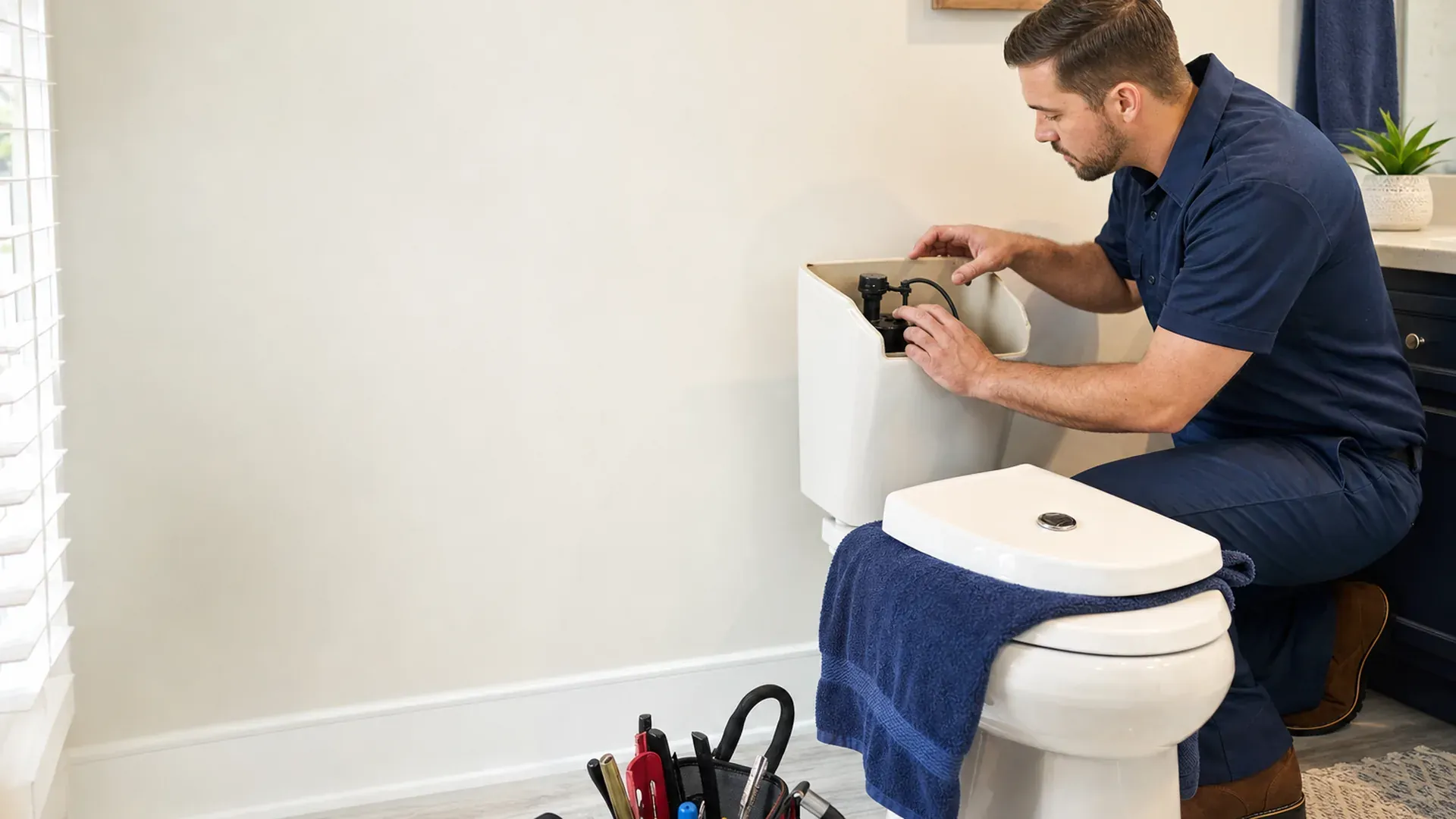
Toilet repair in Jacksonville covers the problems every home eventually has: a toilet that runs or refills on its own, leaks at the base or the tank, rocks on the floor, or clogs too often. Most are fixed with new internal parts or a new wax ring and bolts. When the toilet is old, cracked or a constant water waster, replacing it is often the better value.
Running, leaking, clogged toilets
Running or refilling
A worn flapper, a misadjusted float or a failing fill valve lets water trickle into the bowl. A running toilet can waste a surprising amount of water and is one of the most common causes of a high water bill.
Leaking at the base
Water around the base usually means the wax ring has failed. On a slab floor it can soak into grout and baseboards, and on a raised floor it can rot the subfloor.
Leaking at the tank
Drips from tank bolts, the supply line or the shut-off valve, or a cracked tank.
Frequent clogs
Older low-flow toilets, partial blockages in the trap or drain, or a main line problem if other drains are slow too.
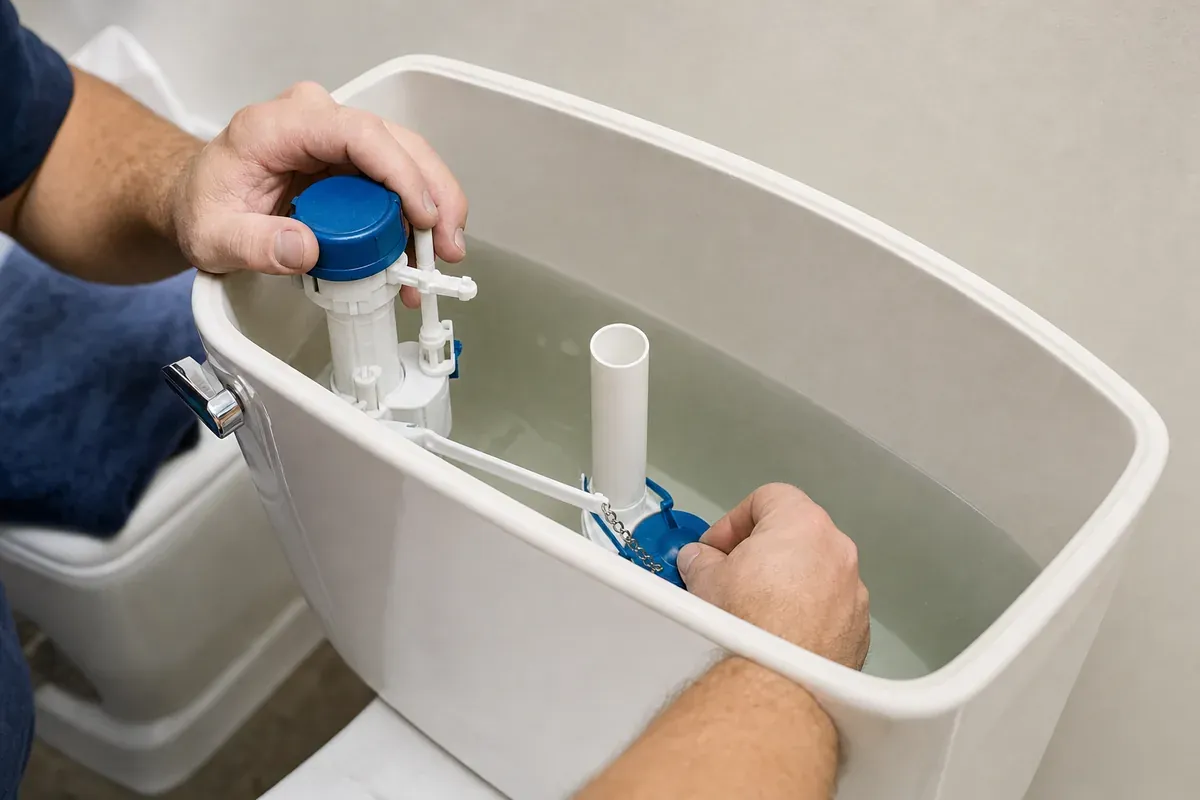
A quick test for a silent leak: put a few drops of food coloring in the tank and wait 15 minutes without flushing. If color shows up in the bowl, the flapper is leaking.
If the toilet gurgles or backs up while other drains are slow, the problem is probably the main line, not the toilet. See drain cleaning.
Replacement
Replace rather than repair when the bowl or tank is cracked, the toilet keeps clogging despite clear drains, parts are no longer available, or it's an older model that uses far more water per flush than current ones. Installation includes removing the old toilet, checking the closet flange, setting the new toilet on a new seal, connecting a new supply line and shut-off if needed, and checking for leaks.
- Comfort height. Taller bowls are easier for many adults to use.
- Water efficiency. WaterSense labeled toilets use 1.28 gallons per flush or less.
- One-piece vs two-piece. One-piece models are easier to clean.
- Rough-in size. Most homes use a 12 inch rough-in, but older homes may differ, so measure before buying.
Remodeling the whole bathroom? See bathroom plumbing.
What affects the cost
- Repair vs replace. A flapper or fill valve is a small job; a new toilet costs more.
- Flange condition. A broken or rusted flange needs repair before a new toilet can seal.
- Shut-off valve. Old valves often need replacing.
- Toilet model. You can supply your own or have one provided.
Toilet repair across Jacksonville
Toilet repair FAQ
Why does my toilet keep running?
Usually a worn flapper or a fill valve that's set too high or failing. Replacing those parts fixes most running toilets.
Why is water leaking around the base of my toilet?
The wax ring that seals the toilet to the drain has likely failed, or the toilet is loose. It should be reset with a new seal before it damages the floor.
Should I repair or replace an old toilet?
Repair if it's in good shape and only needs internal parts. Replace if it's cracked, clogs often or uses a lot of water per flush.
How long does toilet installation take?
Usually an hour or two, longer if the flange or shut-off valve needs repair.
Is a clogged toilet an emergency?
Not usually if you have another one. If it's your only toilet, it's overflowing, or other drains are backing up too, call right away.