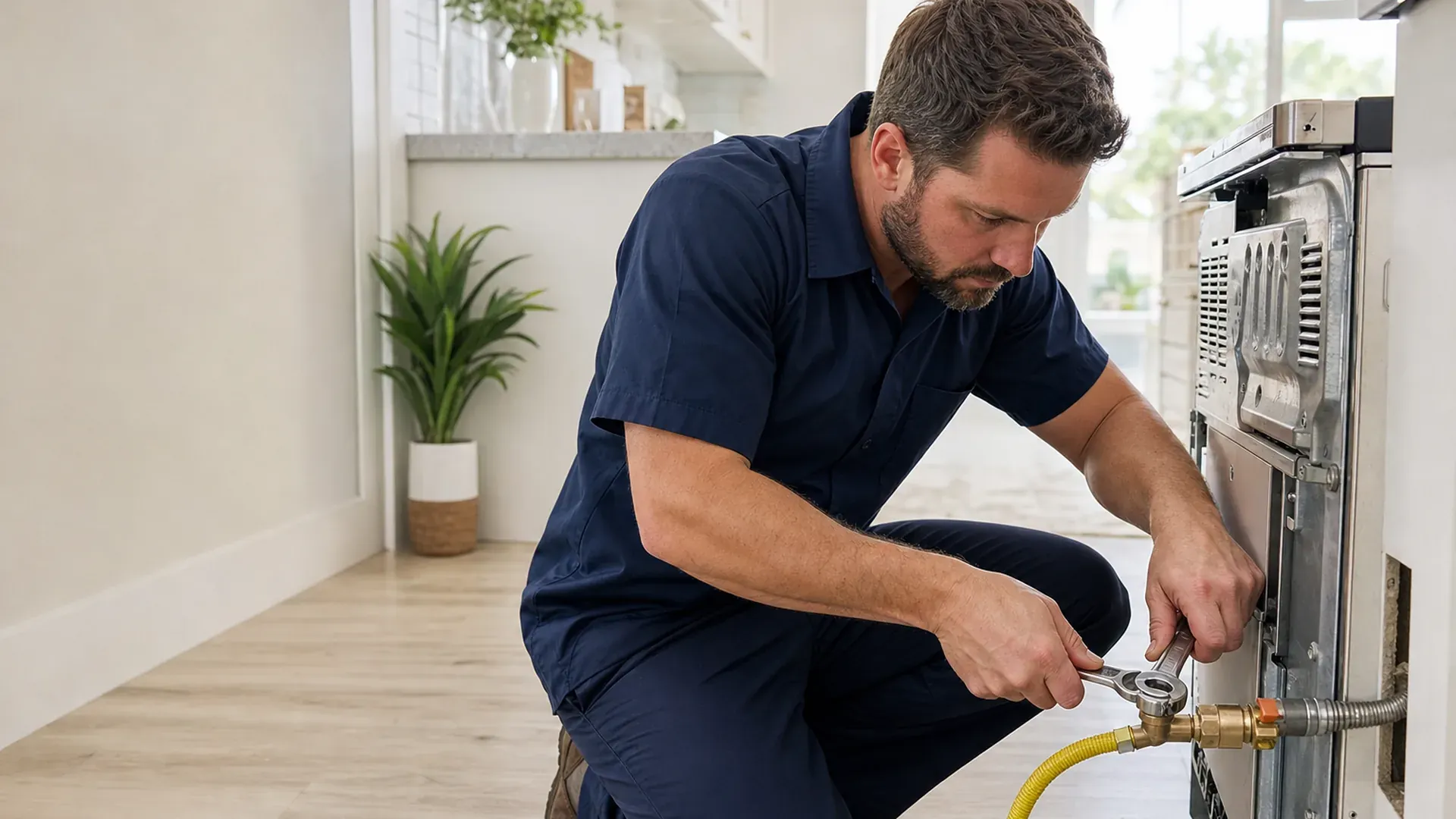
Gas line repair and installation in Jacksonville covers running new gas piping to appliances like ranges, dryers, generators, pool heaters, grills and tankless water heaters, repairing leaking or damaged lines, and pressure testing the system for safety and inspections. Homes in Jacksonville use natural gas from TECO Peoples Gas or propane from a tank, and the same care applies to both.
Smell gas right now? Don't flip switches, use a phone inside or light anything. Get everyone out, leave the door open behind you and call your gas utility's emergency line or 911 from a safe distance. A plumber repairs the line once the utility has made it safe. For any other urgent problem, see our 24/7 emergency plumber page.
Gas line installation
Adding a gas appliance means sizing and running a new branch from your existing gas piping, or from the meter or propane regulator, with a shut-off valve and the right connector at the appliance. The pipe has to be sized for the total demand of everything on the system, which is why adding a big load like a tankless heater or a whole-home generator sometimes means upgrading the line or the meter.
Ranges, cooktops and ovens
A dedicated shut-off and a flexible appliance connector behind the range, sized for the appliance.
Dryers and fireplaces
Gas dryers and gas log fireplaces need their own valves and properly rated connectors.
Generators
Standby generators draw a lot of gas. Line and meter capacity must be checked before installation.
Tankless water heaters
Tankless units need far more gas flow than tank heaters, often a larger line. See tankless installation.
Outdoor kitchens, grills, pool and spa heaters and gas lanterns are popular in Jacksonville backyards and are installed the same way, with outdoor-rated materials and proper burial depth or protection for exposed runs.
Gas line repair & leaks
Gas lines leak at threaded joints that loosen over time, at corroded sections of older black iron pipe, at damaged flexible connectors and where lines were hit during digging or construction. Corrugated stainless steel tubing, called CSST, which is common in newer homes, must be properly bonded to reduce the risk of damage from lightning, and Northeast Florida gets plenty of lightning.
A plumber finds the leak with an electronic gas detector and leak solution, isolates the section and repairs or replaces it, then pressure tests before turning the gas back on and relighting appliances.
Gas line pressure testing
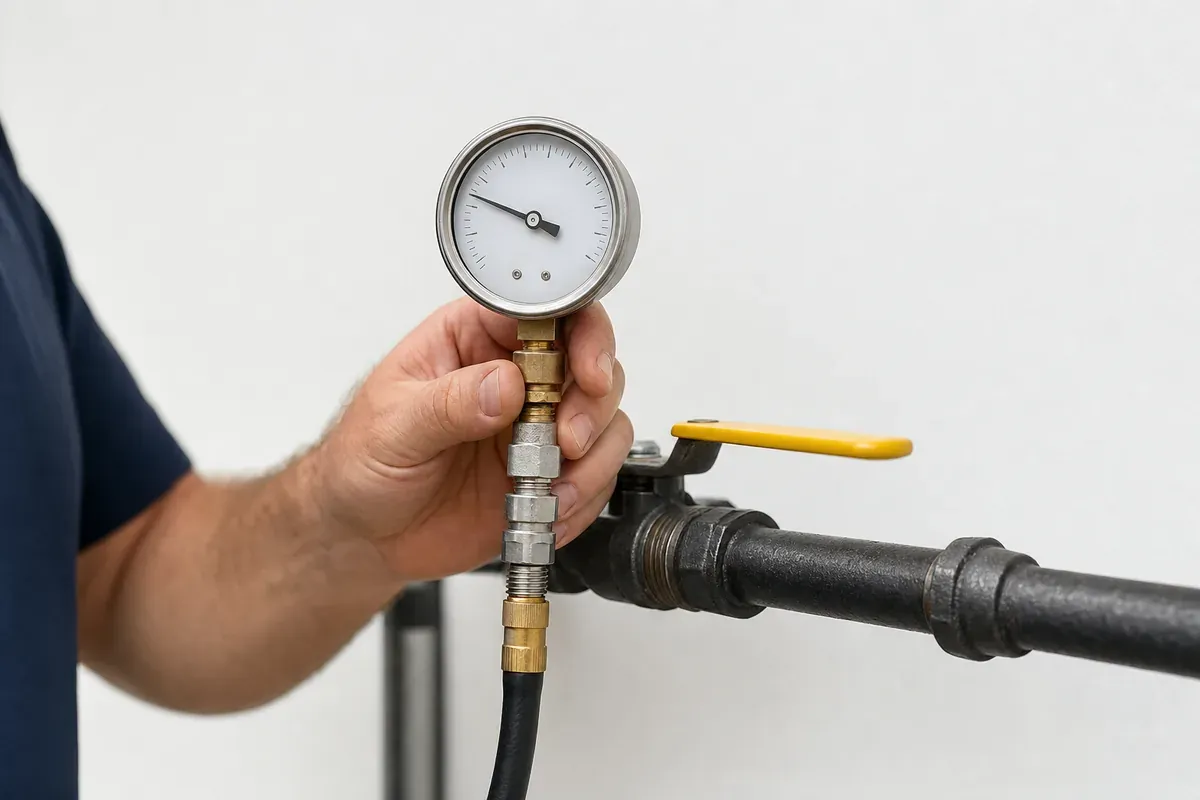
A pressure test isolates the gas piping, pressurizes it with air to a set pressure and watches a gauge for a set time. Any drop means a leak. Pressure tests are required for new gas piping and for many repairs before the inspector approves the work and the utility turns the gas on. They're also commonly done after a gas leak repair, when buying a home with older gas piping, or when converting from propane to natural gas.
Gas fitting services
- Adding or replacing appliance shut-off valves
- Replacing old or kinked flexible appliance connectors
- Capping lines for removed appliances
- Propane to natural gas conversions where service is available
- Moving gas lines during kitchen remodels
- Sediment traps and connections for new water heaters
Safety: smell gas?
Natural gas and propane both have an added odorant that smells like rotten eggs or sulfur. Propane is heavier than air and collects near the floor, so check low areas. Carbon monoxide is different: it has no smell, which is why every home with gas appliances should have working CO alarms near sleeping areas. Any yellow, flickering or sooty burner flame on a gas appliance is worth having checked.
Permits & what affects the cost
New gas piping and most gas line repairs require a permit and an inspection in Jacksonville and surrounding counties. Ask about the permit when you discuss the price.
- Length and route. A short run to a range is simpler than a long run to a generator in the yard.
- Pipe size and capacity. High-demand appliances may require a larger line or meter upgrade.
- Material. Black iron, CSST or polyethylene for buried lines.
- Permit and testing. Required for most new work and repairs.
Gas line services across Jacksonville
Gas line FAQ
Can a plumber install a gas line in Jacksonville?
Yes. Gas line installation and repair is done by licensed plumbing or gas contractors. Ask the plumber for their license number before work starts.
Do I need a permit to run a gas line?
New gas piping and most repairs require a permit and inspection, including a pressure test, before the gas is turned on.
How do I know if I have a gas leak?
A rotten-egg smell, a hissing sound near a gas line or appliance, dead plants over a buried line or bubbles in standing water over it are all warning signs. Leave and call your gas utility or 911 from outside.
Can I install a gas range myself?
Connecting a gas appliance safely requires the correct connector, a shut-off valve and a leak check. Because a mistake can be dangerous, it's best done by a qualified professional.
Do I need a bigger gas line for a tankless water heater?
Often, yes. Tankless units use much more gas at full output than tank heaters, so the existing line and sometimes the meter may need upgrading.