
The most common signs of sewer line problems are several drains backing up at once, gurgling toilets, sewage smells inside or in the yard, a soggy or sunken patch of lawn over the line, and clogs that come back within weeks of cleaning. In Jacksonville these usually trace back to old cast iron, clay or Orangeburg pipe and roots from mature trees. A camera inspection confirms the cause, and sewer line repair fixes it.
Sign 1: More than one drain is slow or backing up
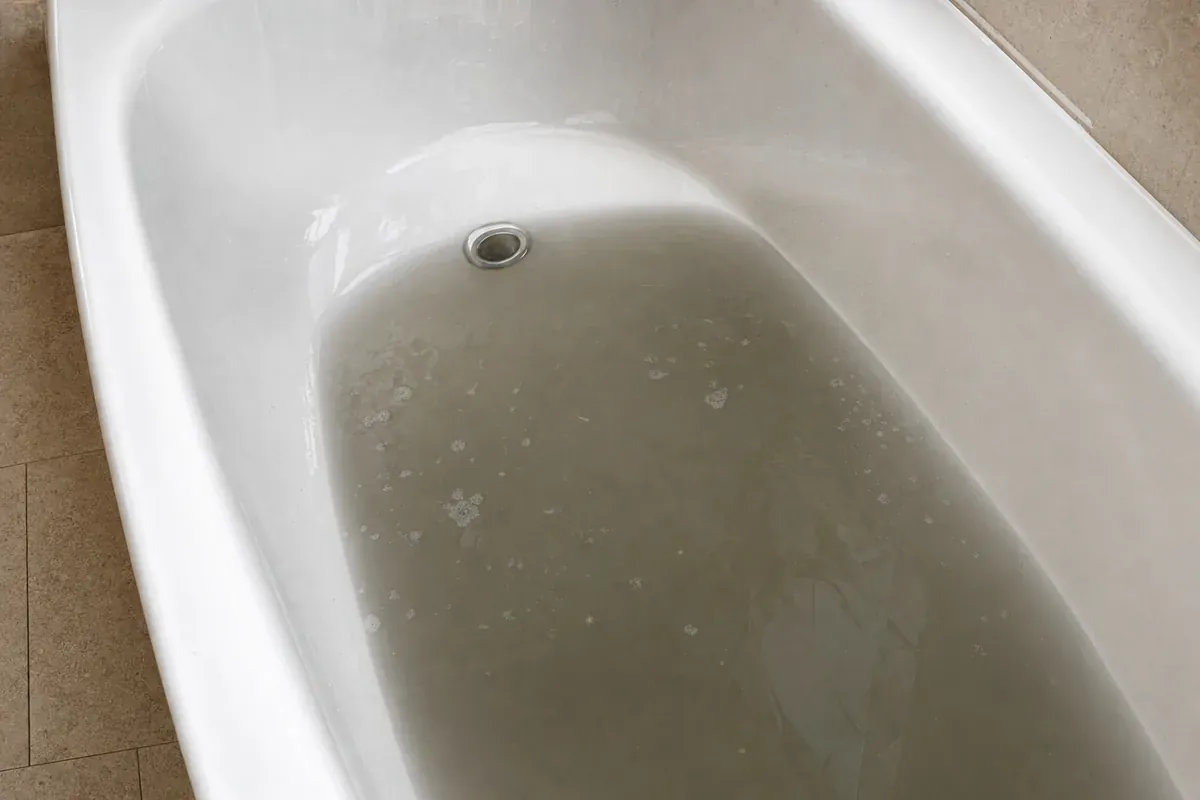
A single slow sink is a local clog. When the toilet, tub and shower are all slow, or the lowest drain in the house backs up, the problem is in the main line that everything flows into. In slab homes, the lowest drain is usually a shower or tub on the ground floor.
Sign 2: Gurgling and water appearing where it shouldn't
Gurgling from a toilet when the washer drains, or water bubbling up in the tub when you flush, means air and water are being pushed back up the line because it can't flow out freely. It's one of the earliest and most reliable warnings.
Sign 3: Sewage odors
A sewer smell inside, especially near floor drains, or outside near the cleanout or along the path of the line, can mean a crack or break that's letting gases escape. A dry trap in an unused drain can also cause odors, so run water in rarely used fixtures first.
Sign 4: Soggy, green or sunken lawn
A broken sewer line leaks wastewater into the soil. You may see a patch of lawn that stays wet, grass that's noticeably greener and faster growing, or a depression where soil has washed into the broken pipe. In Jacksonville's sandy soil, a collapsed line can even create a small sinkhole.
Sign 5: Repeat clogs
If the main line needs clearing again a few weeks or months after the last time, cleaning isn't fixing the cause. Roots, a sag where waste collects, or a broken section that catches debris will keep coming back until the pipe is repaired.
Sign 6: Pests and slab problems
Rats and roaches can enter homes through broken sewer lines. Under slabs, a leaking cast iron drain can wash out soil, sometimes contributing to cracks in floors or settling. These are less common signs, but worth knowing.
Why Jacksonville sewer lines fail
Old pipe materials
Homes built before about 1975, in Riverside, Avondale, Springfield, San Marco, Murray Hill and Arlington, often have cast iron or clay laterals. Some 1950s and 1960s homes have Orangeburg pipe, which collapses with age.
Roots
Live oaks, laurel oaks and other big trees send roots into pipe joints and cracks in search of water.
Settling and sandy soil
Pipes sink over time and form bellies where waste collects. A high water table can make it worse.
What goes down the drain
Grease, wipes and paper towels build up, especially where pipes are already rough or sagging.
What to do if you see the signs
- Stop using water if sewage is backing up. Every flush, shower and load of laundry adds to the backup.
- Don't pour chemical drain cleaners into the line. They won't fix a broken pipe and make the job hazardous.
- Call for drain clearing if you need water flowing again. See drain cleaning.
- Get a camera inspection. It shows whether the problem is roots, a belly, a break or a collapse, and where. See camera inspection.
- Choose a repair. Spot repair, full replacement or trenchless lining, depending on what the camera shows.
When to call a plumber
Call right away if sewage is coming into the house. Otherwise, call when you notice any of these signs, especially more than one at a time. In the Jacksonville area, call (833) 819-1044 any time, day or night, or read more about sewer line repair in Jacksonville.
Sewer line problems FAQ
How do I know if my sewer line is collapsed?
Repeated backups that clearing doesn't fix, sewage in the lowest drains and a sunken or soggy patch of lawn are strong signs. A camera inspection confirms it.
Can a collapsed sewer line be fixed without digging?
A fully collapsed section usually needs to be dug up and replaced. Lines that are cracked or root-damaged but still open may be candidates for trenchless lining.
Who pays for sewer line repair in Jacksonville?
Generally the homeowner is responsible for the line from the house to the property line or utility cleanout. The utility handles the main in the street.
Can roots be cleared from a sewer line permanently?
Cutting roots buys time, but they come back through the same cracks. A permanent fix means repairing or lining the damaged pipe.
Is a sewer backup an emergency?
If sewage is coming into the house, yes. Stop using water and call for emergency help.